In just 18 months, artificial intelligence has transformed from an intriguing experiment into an indispensable development partner. At Levi9, this shift is fundamentally reshaping what developers can achieve and how teams deliver value to clients.
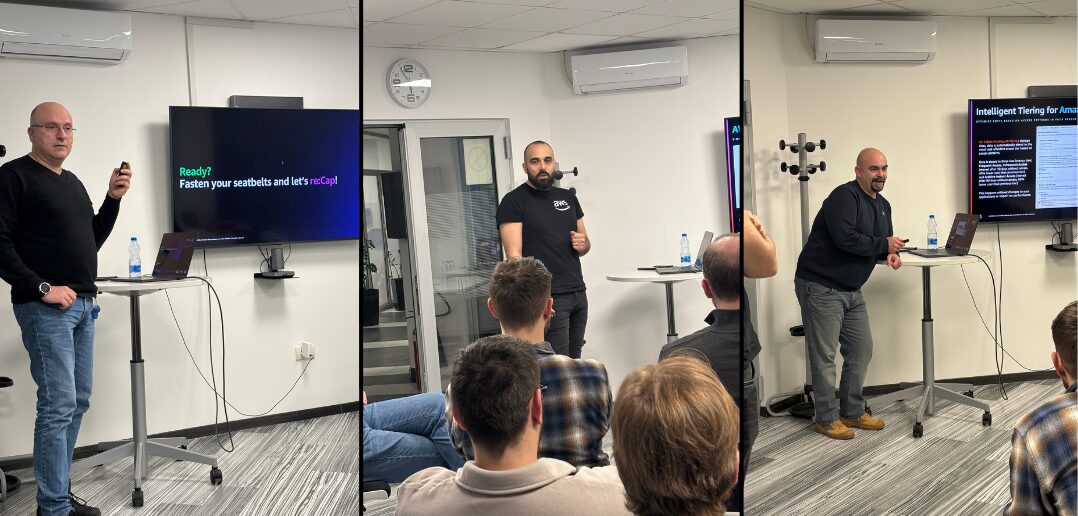
But what does this look like in practice? At Levi9, Software Architect Marko Milošević, Tech Lead Nemanja Pavlović, and Test Architect Nenad Resimić are experiencing this shift firsthand – and fundamentally reshaping what developers can achieve. This is why they were the perfect voices for our latest AI9 article exploring AI in depth.
The Catalyst: When Possibility Became Practical
The turning point came in mid-2024 – while AI coding assistants had existed before, they remained limited – helpful for junior tasks, but unable to truly augment experienced developers.
That changed. AI became a legitimate development partner capable of handling complex architectural decisions, generating comprehensive test coverage, and prototyping entire applications in hours rather than weeks.
“It’s like coffee,” explains Nemanja Pavlović, Tech Lead at Levi9. “You’re not separating it from development anymore.”
Beyond Code Completion: A Workflow Revolution
Nenad Resimić, Test Architect at Levi9, describes the mental shift: “My approach completely shifted from trying to do things manually to thinking more creatively and delegating. I’m immediately thinking about building solutions with AI.”
Tedious tasks – writing boilerplate code, generating test suites, creating documentation – now happen autonomously. This frees developers to focus on creative work: architectural decisions, problem decomposition, and translating business needs into technical solutions.
“Now we are developers with superpowers. It is like having three or four mid-level developers next to you, working 24/7,” Nemanja notes.
Real Impact: From Three Months to Production
Take Events9, an internal application with substantial scope that the team delivered fully functional in under three months – including comprehensive test coverage and documentation. Two words: vibe coding.
“We didn’t skip the boring stuff like writing tests and documentation,” Nemanja notes. “The code quality is better, and test coverage is much better than before.”
These tests proved their value when subsequent updates revealed breaking changes in unexpected places – issues that manual testing might have missed entirely.
Prototyping at the Speed of Conversation
Marko Milošević, Software Architect at Levi9, highlights prototyping as one of the most valuable applications: “The best way to prove something is by demoing a POC, and AI is a tremendous help there.”
Teams can now sketch interfaces in one or two prompts and demo functionality in hours, transforming client conversations from theoretical discussions into concrete demonstrations.
“The imagination of our clients can reach out to space,” Nemanja observes. “Now we can easily showcase situations and how we plan to resolve them with quick prototypes.”
By rapidly creating functional prototypes, Levi9 bridges the gap between concept and reality for organizations that understand AI’s potential abstractly but struggle to envision specific applications.
The Tool Ecosystem: Convergence on Intelligence
While developers use various interfaces – Cursor, Claude Code, Replit – they’re converging on the same underlying models, particularly Claude Sonnet from Anthropic.
“Pretty much every single moment since mid-2023, the top Claude model was the top model,” Marko notes. The interface matters, but the model’s reasoning capability ultimately determines what’s possible.
Building Skills, Not Just Using Tools
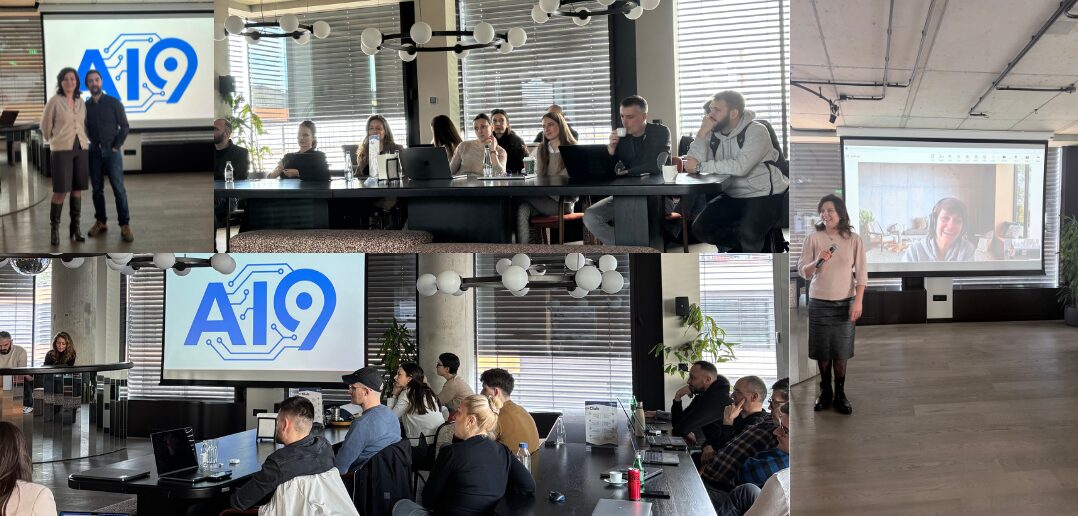
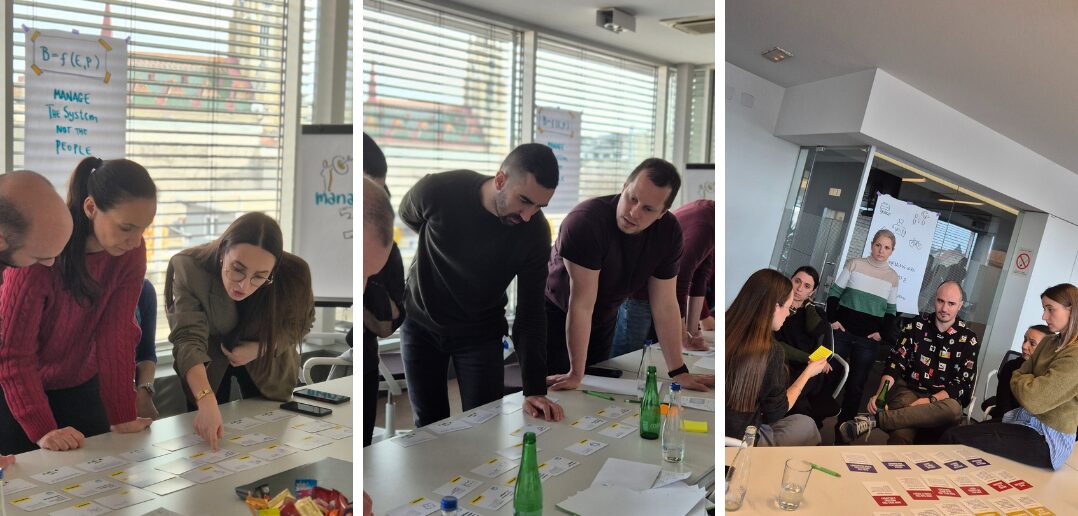
Adoption hasn’t been without challenges. The team’s approach reflects Levi9’s culture of continuous learning, running regular sessions showcasing use cases, and demonstrating tangible benefits.
“The most important thing is for people to understand the benefit,” Nenad explains. “When they perform a specific task and see how fast and how good it is – that’s the moment of transformation.”
The Human Factor Behind AI's Capabilities
Ask the experts from Levi9 about AI limitations, and the response is surprising: they don’t see any.
“From my perspective, there are absolutely no limitations,” Marko states. “The only limitation is that whenever AI doesn’t do something correctly, it means you failed – maybe choosing the wrong model, not giving enough tools, or not understanding what you want to do.”
This team views AI as an extremely capable system that requires proper configuration and guidance. The constraint isn’t the AI’s capability; it’s the human’s ability to frame problems effectively.
The Evolving Role of the Developer
Nemanja predicts the erosion of language-specific specialization: “In the future, there won’t be React developers or Golang developers, in my opinion. For example, on my current project, I’m working in React Native – which isn’t my main language at all – and I’m finishing tasks as if it were PHP.”
Technical syntax knowledge becomes less critical, but understanding architecture, decomposing problems, and guiding AI toward effective solutions becomes paramount.
The experts’ advice for hesitant developers is clear: start immediately. “The tool is changing so rapidly that not understanding how it previously worked will definitely be a limitation,” Nenad reflects.
Beyond Development: A Strategic Client Advantage
Levi9’s AI maturity offers tangible benefits: rapid prototyping, minimal investment validation, and production-quality code with comprehensive testing. This fundamentally changes project economics and risk profiles.
Internal tools like MentorMatch and Events9 were built with quality standards that would have required significantly larger teams using traditional approaches. For clients, this translates to shorter time-to-market, lower development costs, and higher-quality deliverables.
The Path Forward: AI as Standard Practice
This levi niners expect AI assistance to simply become standard development practice – not a special initiative, but a fundamental expectation of how software gets built.
What seemed revolutionary 18 months ago now feels essential. The question isn’t whether AI will transform software development, it’s whether organizations and individuals will adapt quickly enough to remain relevant.
At Levi9, by embracing AI-assisted development as both a cultural mindset and a practical toolkit, the team is discovering what’s possible when human creativity combines with machine intelligence. The result isn’t a replacement of human developers – it’s an amplification of what they can achieve.
___
***This article is part of the AI9 series, where we walk the talk on AI innovation at Levi9.***
In this article:

Levi9 Serbia