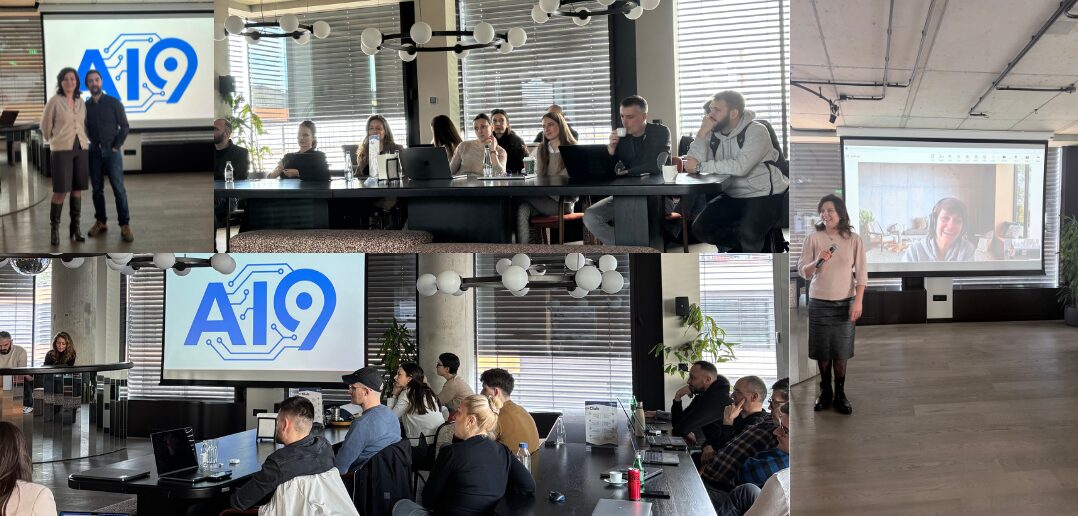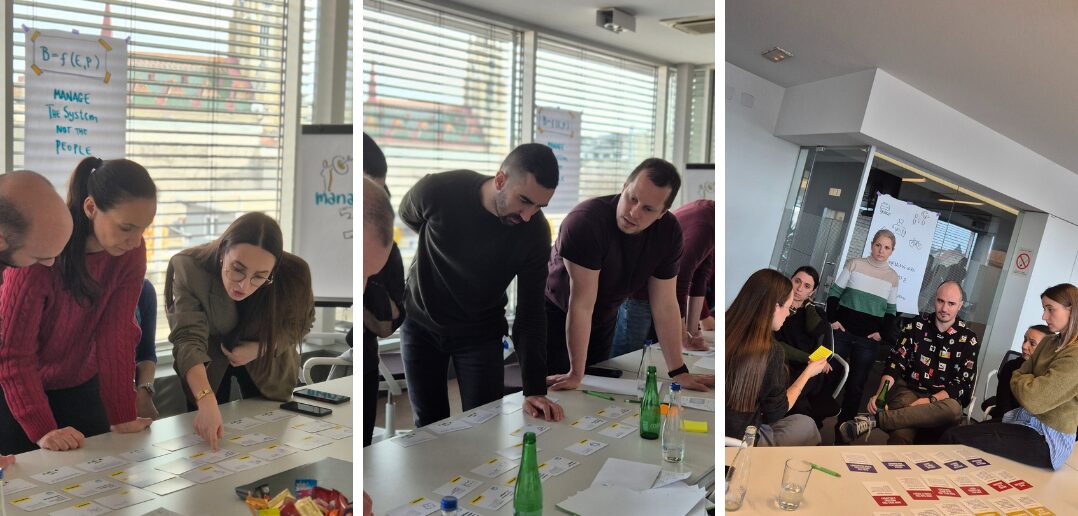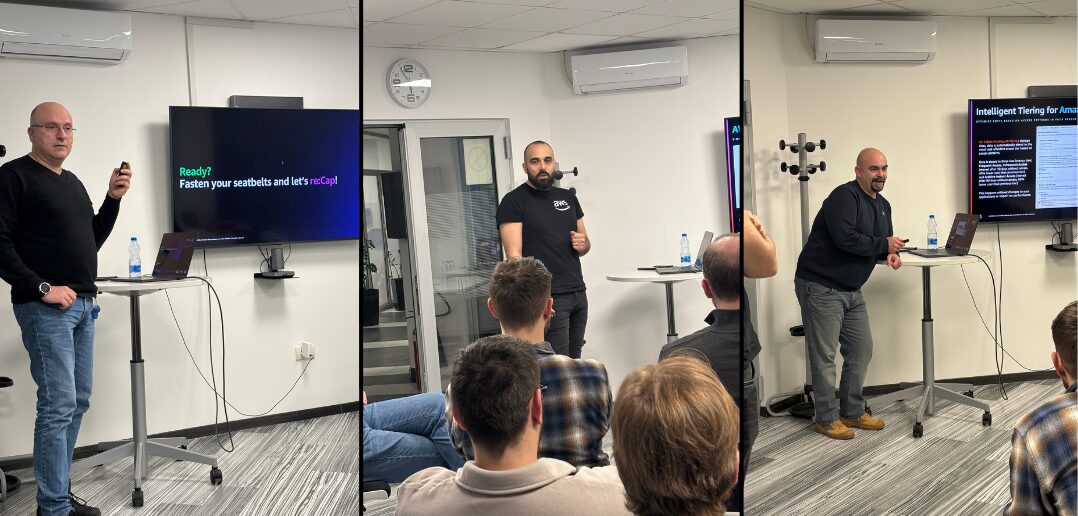
AWS User Group Zrenjanin recently hosted a meetup to discuss the groundbreaking announcements from AWS re:Invent 2025, held December 1 – December 5 in Las Vegas. This year’s event, attended by over 60,000 developers and cloud professionals, marked a pivotal moment in cloud computing with a clear focus on agentic AI, developer productivity, and enterprise modernization.
AWS re:Invent 2025 introduced a comprehensive vision for autonomous AI agents that can work alongside development, operations, and security teams. From the announcement of three frontier agents (Kiro developer agent, security agent, and DevOps agent) to innovations in Amazon Bedrock, the message was clear: the era of AI agents is here.
Beyond AI, the conference showcased significant advancements across the entire AWS ecosystem–new compute capabilities with Graviton5, enhanced database services with Database Savings Plans, revolutionary code modernization tools through AWS Transform, and serverless innovations with Lambda Durable Functions. The event also emphasized security, governance, and trust as foundational elements for scaling AI and cloud operations.
During the meetup, our Levi9 speakers – Nikola Đorđević, Duško Milićev and Dejan Martinovski, shared their perspectives on which announcements will have the most significant impact on their work and the broader tech landscape in Serbia. Below, you’ll find their personal highlights and insights on what these innovations mean for developers, architects, and businesses in our region.
Community Perspectives
Dejan: The AI-Driven Future of Cloud Operations
The last re:Invent clearly showed that AI is not slowing down at all. Last year was already heavily AI-focused, and this year AWS is definitely continuing in the same direction. AI is changing the world, and it’s also changing how we think about using the cloud going forward.
What really caught my attention is the new frontier agents. It’s obvious that AWS wants to give customers more intelligent and automated ways to run development, operations, and security in the cloud. These agents can help speed up incident response, improve visibility into potential vulnerabilities, and make cloud environments more reliable overall. I think this is a great direction, especially for teams looking to modernize their cloud environments using AI.
The pricing for services supported by the frontier agents isn’t available yet since the services are still in preview, but that actually makes it a good time to try them out. I’m curious to see how much they can improve SDLC pipelines, not just in terms of speed, but also in terms of security and overall quality.
What I also appreciate is that AWS isn’t forgetting about existing services. Even with all the AI hype, they’re still actively improving the core tools we use every day. I expect we’ll see even more AI-powered features and agent-driven solutions coming soon, but it’s good to see that the fundamentals keep evolving too.

Dusko: Infrastructure Evolution and Integration
The big theme across Storage, Migration & Transfer was making data more intelligent and automation-driven–from smarter tiering and table-like capabilities in object storage to tighter integration between data movement, governance, and analytics.
In the Compute and Containers space, the emphasis was on giving teams more power and performance with less operational overhead, especially for AI/ML workloads and managed Kubernetes environments.
For App Integration and Serverless, the theme was clear: build event-driven applications faster and with fewer moving parts, thanks to tighter integrations between messaging, orchestration, and serverless functions.
AWS is no longer just shipping features–it’s refining the platform so teams can move faster with less infrastructure friction. The overall direction is clear: more managed abstractions, better performance per dollar, and tighter integration across services to support modern, data-intensive, event-driven applications.
Nikola: Production-Ready AI with AgentCore
I’ve been tracking re:Invent for a year now and cannot recall such numbers of releases. Coming from the DevOps world and paying attention to running at scale, I would like to emphasize the new capabilities of AgentCore. AgentCore, one of the youngest services released, enabled us to run agents in production, enforce controls, and provided observability with insights into the operations. It is the bridge between playing and making cool stuff with AI and running it in production.
During re:Invent they continued to improve its capabilities. AgentCore Policy was announced first, which enabled teams to define and set AI agent behaviors in natural language. AgentCore Evaluations provides pre-built evaluators to monitor the performance of the agent in important dimensions like correctness and safety. AgentCore Memory allows agents to learn from previous interactions and improve context retention. These features are valuable enhancements to AgentCore and are enabling us to deploy and control agents in production at scale. Looking forward to hearing about new releases soon.
AWS re:Invent 2025 demonstrated that cloud computing is entering a new era where AI agents, automation, and intelligent services are becoming central to how we build and operate systems. The announcements reflect AWS’s commitment to both pushing the boundaries of what’s possible with AI while continuing to strengthen the foundational services that developers rely on daily.
For the Serbian tech community and AWS User Group Zrenjanin, these innovations present exciting opportunities to experiment with cutting-edge technologies and bring advanced cloud capabilities to local projects and enterprises. We look forward to exploring these new services together and sharing our experiences as we adopt them in our work.
Stay tuned for more meetups where we’ll dive deeper into specific services and share hands-on experiences!
In this article: